Dávka - Your daily dose of Slovak news
Last refreshed: 08/06/2026 10:36 · 59 articles added
Stories are refreshed at 05:30, 10:30, 15:30, and 21:30 UTC.

Domestic Politics

View all2265 stories
Domestic Politics

Slovak Government Coalition Defends Decision to Cancel Postal Voting

Slovakia's ruling coalition has defended its decision to cancel postal voting, acknowledging that voters abroad and university students tend to have different political preferences than domestic supporters of government policies. The coalition, led by Prime Minister Robert Fico's Smer-SD party, appears to recognize that overseas Slovaks and those studying at Western universities are less likely to support their policies compared to domestic voters who benefit from social programs like the 13th pension. The admission suggests the government views postal voting as potentially disadvantageous to their electoral prospects, as it would enable participation from demographics that traditionally vote for opposition parties rather than the ruling social-democratic coalition.


|
Domestic Politics

Slovak Culture Ministry Ends Church Facade Renovation Support as Regional Funds Show Religious Project Bias

Slovakia's Culture Ministry has announced it will no longer support church facade renovations through its funding programs. The decision comes amid scrutiny over participatory budgeting practices in regions led by officials like Milan Majerský, where such cuts are being offset through alternative local grant schemes. Participatory budgeting allows residents of municipalities, cities, or regions to directly decide on public spending by proposing projects and voting via SMS for which nominated initiatives receive financial support. Questions have emerged about the fairness of this system in Majerský's region, where 90 percent of winning projects have connections to religious organizations, raising concerns about potential bias in the allocation of public funds through citizen-driven budget processes.

|
Domestic Politics

Slovakia's 450-Million-Euro Armored Vehicle Deal Stalls Amid Dispute with Finnish Manufacturer

A major Slovak defense contract worth 450 million euros for armored personnel carriers has encountered significant delays, with Defense Minister Robert Kaliňák accusing the Finnish arms manufacturer of being arrogant. The project involves the procurement of military transport vehicles for the Slovak Armed Forces. According to former Defense Minister Jaroslav Naď, the problems stem primarily from Slovak subcontractors rather than the Finnish company, with complications arising specifically in the delivery of weapon turrets equipped with new Slovak-made cannons. The delays highlight ongoing challenges in Slovakia's military modernization efforts and tensions between international defense contractors and local suppliers in the country's defense procurement process.

|
Domestic Politics

Slovak Parliament Overrides Presidential Objections to Investment Law Amendments

Slovakia's parliament has re-approved controversial amendments to the collective investment law in their original form, rejecting objections raised by President Peter Pellegrini. The National Council, Slovakia's parliament, voted to maintain disputed provisions that Pellegrini had flagged as problematic additions to the legislation. The president had previously returned the law to parliament with concerns about specific amendments, known as "prílepky" in Slovak politics - additional provisions attached to bills that are often unrelated to the main legislation. By re-approving the law unchanged, parliament has effectively overridden the presidential veto, allowing the collective investment amendments to proceed as originally drafted.

|
Domestic Politics

Slovak Towns Union Demands Expert Discussion on Public Administration Reform

The Union of Towns of Slovakia called for comprehensive expert discussion on proposed public administration reforms. The organization, which represents municipal governments across the country, presented its formal requirements regarding the reform initiative. Public administration reform has been a recurring topic in Slovak politics, as successive governments have sought to modernize the country's bureaucratic structures and improve efficiency in delivering public services to citizens.

|
Domestic Politics

Slovak Judges Association Condemns Rising Attacks on Judiciary, Warns of Legitimacy Crisis

The Association of Slovak Judges (ZSS) has condemned a rising wave of attacks against the country's judicial system and called for an immediate end to such actions. The judges' association warned that continued attacks are creating an environment where the delegitimization of judicial power is becoming a socially acceptable norm. Slovakia's judiciary has faced mounting pressure in recent years amid ongoing debates over judicial reforms and high-profile corruption cases, with the independence of courts becoming a contentious political issue.

|
Domestic Politics

Culture Ministry Official Elected to Lead Slovakia's Public Media Council

Ľuboš Benčúrik, a senior official from Slovakia's Culture Ministry, has been elected to head the Council of Slovak Television and Radio (STVR). Benčúrik serves as director general of the Ministry's Section for Arts, Creativity, Media and Copyright, making him a direct subordinate of Culture Minister Martina Šimkovičová. The Council of STVR is the governing body that oversees Slovakia's public television and radio services, responsible for strategic decisions and appointing key management positions. The appointment places a government ministry official in charge of supervising the country's public media, raising questions about editorial independence given the direct reporting relationship between Benčúrik and the culture minister.

|
Domestic Politics

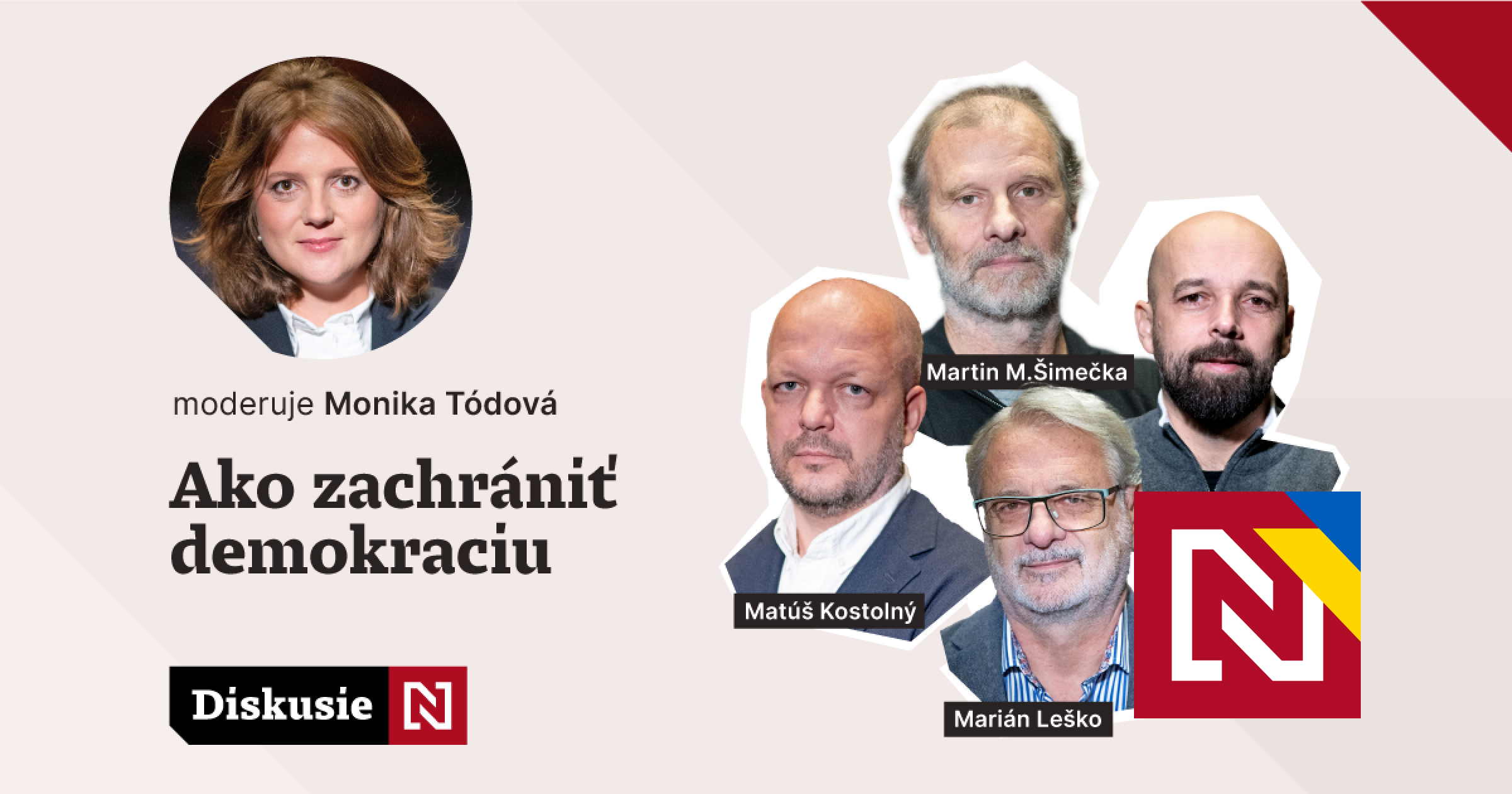
Slovak Media Organizes Democracy Discussion Event in Banská Bystrica

Slovak newspaper Denník N has announced a public discussion event titled "How to Save Democracy" scheduled for June 23, 2026, in Banská Bystrica. The panel will feature political analyst Marián Leško, writer and journalist Martin M. Šimečka, comedian and screenwriter Tomáš Hudák, and Denník N editor-in-chief Matúš Kostolný, with Monika Tódová serving as moderator. The discussion is part of a series examining current political and social developments in Slovakia. Following the debate, participants will offer book signings for "Ficokracia," a work co-authored by Leško that appears to focus on contemporary Slovak politics under Prime Minister Robert Fico's governance.

|
Domestic Politics

Slovakia's ruling coalition plans to exclude 200,000 citizens from voting, expatriate groups warn

Slovak expatriate organizations are warning that the ruling coalition's plan to eliminate postal voting could exclude 200,000 Slovak citizens living abroad from participating in democratic elections. The civic groups argue that canceling postal voting would undermine democracy by preventing a significant portion of the Slovak diaspora from exercising their constitutional right to vote. The coalition government, led by the social-democratic Smer-SD party, has not yet provided detailed justification for the proposed change to the electoral system that currently allows overseas citizens to participate in national elections through mail-in ballots.

|
Domestic Politics

Opposition Figures to Discuss Democracy Crisis at Bratislava Event

Political analyst Marián Leško, writer Martin M. Šimečka, comedian Tomáš Hudák, and Denník N editor-in-chief Matúš Kostolný will participate in a public discussion titled "How to Save Democracy" in Bratislava. The event, moderated by Monika Tódová, is part of an ongoing series examining current political and social developments in Slovakia. Following the debate, participants will sign copies of their book "Ficokracia," which appears to critique the current political climate. The discussion reflects growing concerns among opposition voices and civil society about the state of democratic institutions under the current government.

|
Domestic Politics

Emergency situation ends as access road to Králiky village declared safe

The emergency situation affecting the village of Králiky has been declared over, with the access road to the community now deemed safe for travel. Interior Minister Matúš Šutaj Eštok of Hlas-SD, a social-democratic party in Slovakia's ruling coalition, announced the end of the emergency measures that had been implemented to protect residents and ensure public safety in the area.

|
Domestic Politics

State Water Management Company Director Files Criminal Complaint Over Asset Tunneling Allegations

The general director of Vodohospodárska výstavba, a Slovak state-owned water management company, has filed a criminal complaint alleging that the enterprise was subjected to asset tunneling schemes. The director claims that since taking office, the company has canceled multiple questionable contracts that were previously awarded. Asset tunneling refers to the practice of illegally draining resources from a company through fraudulent contracts or agreements, often to benefit connected individuals or businesses at the expense of the organization.

|
Domestic Politics

DNA Evidence on Bottle Insufficient to Convict Man in Cigarette Smuggling Case

A Slovak court ruled that DNA evidence linking a defendant to smuggled cigarettes was insufficient for conviction in a criminal case. The prosecution's case relied primarily on DNA found on a bottle connected to the cigarette smuggling operation, but the court determined this evidence alone did not meet the burden of proof required for a guilty verdict. The prosecutor lacked additional evidence to support the charges against the accused individual.

|
Domestic Politics

Parliamentary Committee Initiates Proceedings Against MP Over Undisclosed Loan

Slovakia's parliamentary committee has begun proceedings against MP Ferenčák following allegations that he failed to properly declare a loan in his mandatory asset disclosure. The lawmaker is accused of providing a loan to another party but omitting this financial transaction from his official asset declaration, which members of parliament are legally required to file annually. Under Slovak law, parliamentarians must declare all significant financial assets, liabilities, and transactions to ensure transparency and prevent conflicts of interest. The proceedings could result in sanctions against Ferenčák if the committee determines he violated disclosure requirements.

|
Domestic Politics

Slovak Public Media Chief Defends Programming Decisions Against Regulator Criticism

The head of Slovak Television and Radio (STVR) defended her decisions to cancel popular programs "Radioheads" and "Sun in the Net" amid criticism from the country's media regulator. Flašíková acknowledged she does not understand why the regulator is attacking the public broadcaster with critical analysis. The controversy highlights ongoing tensions between Slovakia's public media leadership and regulatory authorities over programming choices and editorial independence.

|
Domestic Politics

European Commission Proposes Revoking Slovak Public Procurement Office's Permanent Accreditation Over Conflict of Interest Failures

The European Commission has recommended removing the permanent accreditation of Slovakia's Public Procurement Agency (PPA) due to serious shortcomings in managing conflicts of interest and meeting accreditation criteria. In a formal letter, the Commission highlighted specific concerns about conflicts of interest involving a PPA official directly appointed by Director General Marek Čepko, citing the agency's failure to maintain adequate mechanisms for detecting such conflicts. The Commission's assessment found that the PPA lacks sufficient systems to identify conflicts of interest among its staff and fails to adequately detect connections between companies involved in procurement processes. The agency's shortcomings are deemed so significant that the Commission concluded "one or more accreditation criteria are not met or their fulfillment is seriously inadequate." The Public Procurement Agency oversees the transparency and fairness of government purchasing processes in Slovakia, making its accreditation status crucial for ensuring EU compliance in public spending. Loss of permanent accreditation would represent a serious institutional failure that could affect Slovakia's ability to properly manage EU-funded projects and maintain standards required for European Union membership.

|
Domestic Politics

Slovak Parliament Vice-Speaker Confused About Legal Access to Files During Controversy

Peter Gašpar, a vice-speaker of Slovakia's parliament, made an error regarding his legal access to official files during a recent controversy. The National Council deputy forgot that he legally has access only to his own personal file, not to other documents. The incident occurred as Gašpar became embroiled in what appears to be a politically damaging situation, with the mistake highlighting confusion about proper procedures for accessing official documentation.

|
Domestic Politics

Ruling Smer Party Rejects Opposition Criticism of University Law Amendment

Slovakia's ruling Smer-SD party has dismissed criticism from the opposition liberal party SaS regarding proposed amendments to the country's higher education law. SaS, a member of the opposition, expressed concerns that the legislative changes would exclude foreign evaluators from participating in the grant approval process. The dispute highlights ongoing tensions between the ruling social-democratic coalition and opposition parties over education policy reforms. SaS argued that removing international assessors could undermine the quality and objectivity of academic funding decisions in Slovak universities.

|
Domestic Politics

Progressive Slovakia Calls Emergency Parliamentary Session Over Agricultural Payment Agency

Progressive Slovakia, the main opposition party, has called for an emergency parliamentary session to address issues surrounding the Agricultural Payment Agency. The liberal opposition party warned that if the session does not take place, it will propose a vote of no confidence against Agriculture Minister Richard Takáč. The Agricultural Payment Agency is the state institution responsible for distributing EU agricultural subsidies and rural development funds to Slovak farmers. Progressive Slovakia's move signals growing political pressure on the ruling coalition over the agency's operations, though the specific concerns prompting the emergency session were not detailed.

|
Domestic Politics

Opposition Calls on Health Minister to Address Healthcare Fees Crisis

Opposition parties KDH and Hnutie Slovensko have called on Slovakia's health minister to address what they describe as an unbearable situation regarding healthcare fees. The Christian Democratic Movement (KDH), a center-right opposition party, and Hnutie Slovensko, another opposition party led by former prime minister Igor Matovič, consider the current state of healthcare payment issues to be unsustainable. The opposition's intervention highlights growing concerns about Slovakia's healthcare system, which has faced ongoing challenges with funding, accessibility, and patient costs under the current government led by Robert Fico's Smer-SD party.

|