Dávka - Your daily dose of Slovak news
Last refreshed: 07/06/2026 21:40 · 36 articles added
Stories are refreshed at 05:30, 10:30, 15:30, and 21:30 UTC.

Domestic Politics

View all2254 stories
Domestic Politics

Slovakia Completes 53 Tasks from Revised Prison System Concept

Slovakia's Ministry of Justice and the Prison and Judicial Guard Corps have completed 53 tasks from a revised prison system concept, according to a new report. The Ministry of Justice, which oversees the country's correctional facilities and judicial security, worked alongside the Prison and Judicial Guard Corps to implement changes aimed at modernizing the prison system. The completion of these tasks represents progress in Slovakia's ongoing efforts to reform its correctional institutions and improve conditions within the prison system.

|
Domestic Politics

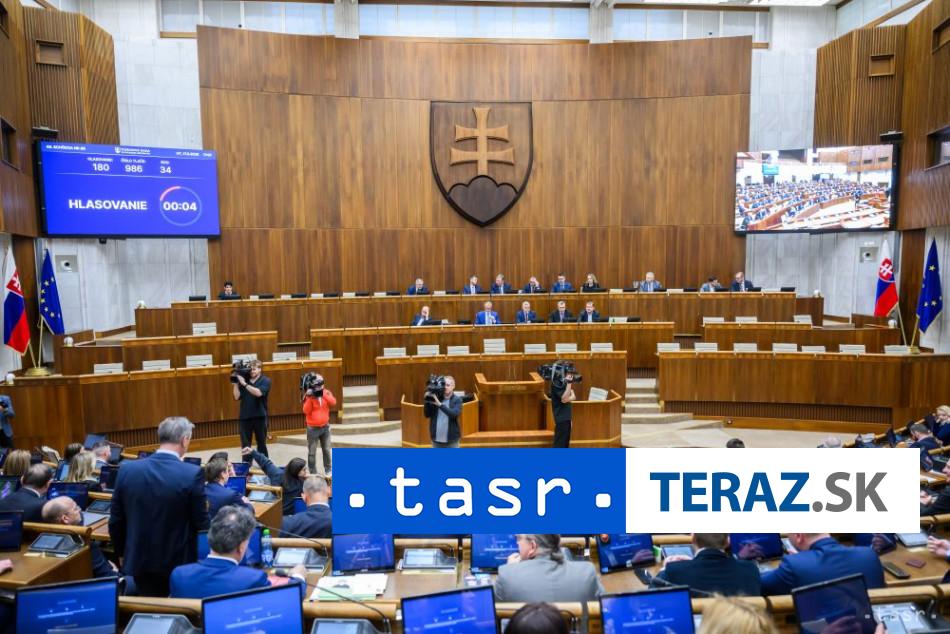
Slovak Parliament Rejects Opposition Proposals on Family Benefits and Intelligence Service Reform

Slovakia's National Council rejected a series of opposition-backed proposals on Wednesday covering family policy, security, and environmental issues. The parliament voted down measures that would have protected large families from cuts to tax bonuses and increased financial support for first-grade students. Lawmakers also blocked an attempt to reform the selection process for the head of the Slovak Intelligence Service (SIS) and strengthen oversight of the intelligence agency. The rejected proposals represented a broad range of opposition initiatives that failed to gain support from the ruling coalition.

|
Domestic Politics

Slovak Government Approves Legal Changes Affecting Ongoing Corruption Cases

The Slovak government has approved new legal amendments that will apply retroactively to ongoing criminal cases, including those already in progress. The changes will affect the high-profile Očistec (Purgatory) corruption case, in which former police chief Tibor Gašpar is among the defendants. Opposition parties have criticized the amendments, claiming they are designed specifically to benefit Gašpar and other defendants in major corruption cases. The Očistec case represents one of Slovakia's most significant anti-corruption investigations in recent years, involving allegations against high-ranking police and political figures.

|
Domestic Politics

Slovak Woman Convicted in Terrorism Case Receives Suspended Sentence

A Slovak court has issued a final verdict in the case of a woman charged with terrorism-related offenses, sentencing her to a suspended prison term. The court found Dibdiaková guilty of endangering the moral education of youth through complicity. The defendant left the courthouse with a conditional sentence rather than facing immediate imprisonment. The case represents the conclusion of legal proceedings that had involved terrorism charges against the Slovak citizen.

|
Domestic Politics

Slovak Government Approves Third Attempt at Witness Protection Law Changes

Slovakia's government approved amendments to witness protection legislation for the third time, just days before the start of a major court case known as Očistec (Purgatory). The changes affect the legal framework governing cooperating witnesses, commonly referred to as "kajúcnici" (penitents) in Slovak legal terminology. The Očistec case, which is set to begin proceedings in the coming days, involves significant criminal charges that are expected to rely heavily on testimony from cooperating witnesses. This marks the third attempt by the government to modify the witness protection laws, suggesting previous versions faced legal or procedural obstacles.

|
Domestic Politics

Slovakia's Supreme Court upholds sentence for woman convicted of endangering youth moral education

Slovakia's Supreme Court on Wednesday definitively ruled in the case of Slovak citizen Renáta Dibdiaková, confirming her conviction for endangering the moral education of youth through complicity. The court upheld a two-year suspended sentence for the offense. The Supreme Court, Slovakia's highest judicial authority, issued the final ruling in the case, making the conviction legally binding. The charge of endangering moral education of youth is a criminal offense under Slovak law that typically involves actions considered harmful to the development and welfare of minors.

|
Domestic Politics

Slovak Parliament Advances Bill to End Postal Voting for Citizens Abroad

Slovakia's parliament moved legislation to its second reading that would fundamentally change how Slovak citizens living abroad can vote in elections. The bill, proposed by the ruling Smer-SD party, aims to eliminate postal voting for overseas Slovaks, representing a significant shift in voting procedures for the diaspora. The National Council, Slovakia's parliament, discussed the electoral law amendments during Tuesday's session alongside debates on the state of public finances. The proposed changes would affect hundreds of thousands of Slovak citizens residing in other countries who currently rely on postal ballots to participate in domestic elections.

|
Domestic Politics

Slovak Government Approves New Civil Code to Replace 60-Year-Old Legal Framework

The Slovak government approved a new Civil Code on Wednesday, replacing legislation that has been in place for more than 60 years. The new legal framework aims to govern everyday relationships between individuals and companies while ensuring unity and clarity in the country's legal system. The current Civil Code was adopted over six decades ago, and the government says the new version will eliminate fragmentation in Slovakia's legal framework. The reform represents a fundamental change in the rules that regulate ordinary interactions between people and businesses in Slovakia.

|
Domestic Politics

Opposition Party Renews Push to Abolish Slovakia's Financial Transaction Tax

Progresívne Slovensko (Progressive Slovakia), Slovakia's main opposition party, has again submitted a proposal to parliament to abolish the country's financial transaction tax. The party's lawmakers Michal Truban and Štefan Kišš argued that the tax is hampering economic growth and deterring foreign investment, describing it as an "economic absurdity." They cited data showing the tax has generated 200 million euros less revenue than the government originally projected. Slovakia introduced the financial transaction tax as part of broader fiscal measures, but it has faced criticism from business groups and opposition politicians who argue it makes the country less competitive for investment. Progresívne Slovensko, a liberal pro-European party that leads polling ahead of the ruling coalition, has made the tax's repeal a key economic policy priority as it seeks to present an alternative vision for Slovakia's fiscal approach.

|
Domestic Politics

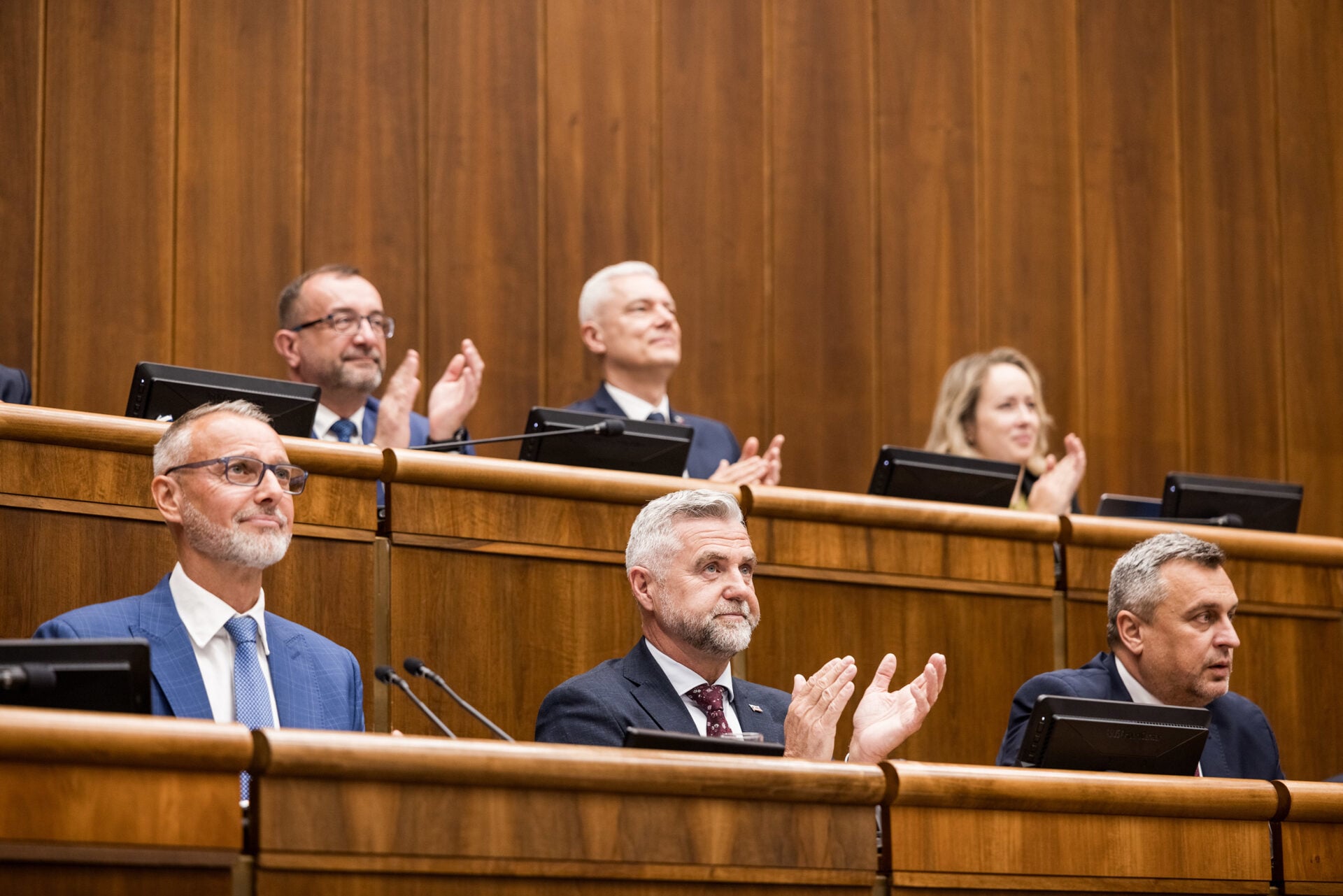
Slovak National Party Leader Calls for Ban on Negative Campaign Advertising

Andrej Danko, leader of the Slovak National Party (SNS), has proposed banning so-called negative public relations campaigns in electoral codes. The proposal comes amid ongoing speculation about the political backing of certain online platforms, including allegations that people behind the scenes have long suspected the SaS party's involvement with the "Myšlienky politikov" (Politicians' Thoughts) website, despite the party's denials. The Slovak National Party is part of the ruling coalition alongside the dominant Smer-SD party, while SaS (Freedom and Solidarity) is a liberal opposition party. Danko's call for restrictions on negative campaigning reflects broader concerns about political communication and electoral practices in Slovakia.

|
Domestic Politics

Slovak Police Launch Large-Scale Anti-Drug Raids Across Country

Slovak police conducted extensive anti-drug operations across multiple locations nationwide, including searches at homes and at a prison facility in Košice-Šaca. Among those detained during the raids was a member of the Prison and Court Guard Service, Slovakia's correctional system security force. The coordinated operation represents a significant law enforcement action targeting drug-related criminal activity across the country.

|
Domestic Politics

Slovak Government to Hold 140th Session as Opposition Focuses on Economic Issues

The Slovak government will convene its 140th session on Wednesday as the country's political scene prepares for an active day of legislative and political activity. Opposition parties, including the Democrats, plan to hold press conferences addressing high fuel prices and Slovakia's economic situation, with the Democrats also expected to discuss a case involving a robbed pensioner. Beyond politics, academic conferences will address issues including workforce aging and the future of modern galleries.

|
Domestic Politics

Slovak Government to Consider State-Run Vehicle Inspections and Thousands of New Rental Apartments

The Slovak government will meet Wednesday to discuss significant changes to vehicle inspection services and housing policy. Ministers will consider proposals to bring technical and emissions inspections under state control, moving away from the current private system. The cabinet will also review progress on a state-supported rental housing project that involves a new investment partner and aims to create thousands of new apartments. The housing initiative represents the government's response to Slovakia's ongoing affordable housing shortage, while the vehicle inspection reforms would mark a shift toward greater state involvement in automotive safety oversight.

|
Domestic Politics

Senior Police Official Questions Secrecy of Ruling in Rozuzlenie Case

A high-ranking police official has challenged the decision to classify a ruling in the Rozuzlenie case, raising concerns about transparency in the investigation. The official highlighted potential legal issues if investigators participate in political campaigns, emphasizing that police officers are required to remain apolitical. The Rozuzlenie case is one of several high-profile investigations in Slovakia involving allegations of corruption and organized crime. The controversy centers on whether investigators can maintain their objectivity and legal standing if they become involved in partisan politics through candidacy on party lists during elections.

|
Domestic Politics

Former Opposition Strategist Urges Slovak Opposition to Move Beyond Anti-Fico Rhetoric

Ivan Šimko, a key architect of the Slovak Democratic Coalition (SDK) that defeated authoritarian leader Vladimír Mečiar in 1998, has called on Slovakia's current opposition parties to develop a unified policy platform rather than focusing solely on opposing Prime Minister Robert Fico. Šimko, who helped orchestrate one of Slovakia's most significant democratic transitions, argues that the opposition is running out of time to present a credible alternative to Fico's government. He emphasized that defeating the current administration requires offering concrete solutions to Slovakia's key problems, not just coalition arrangements and candidate lists. The Slovak Democratic Coalition was a broad opposition alliance that successfully ended Mečiar's increasingly authoritarian rule in the late 1990s, helping to put Slovakia on a path toward EU and NATO membership after years of international isolation.

|
Domestic Politics

Slovak Prime Minister Fico and Interior Minister Kaliňák Face Potentially Damaging Scandal

Slovak Prime Minister Robert Fico and Interior Minister Robert Kaliňák are confronting a new scandal that could prove politically damaging to their leadership. The development comes as observers note that the current ruling coalition has failed to demonstrate greater professionalism than the previous government led by Igor Matovič. The scandal's emergence highlights ongoing governance challenges in Slovakia, where political crises have become a recurring feature of recent years. Matovič, who served as prime minister from 2020 to 2021, led a government that was frequently criticized for its chaotic management style and internal conflicts.

|
Domestic Politics

Slovakia's Chief Prosecutor Released from Hospital After Cardiac Procedure

Maroš Žilinka, Slovakia's Prosecutor General, was discharged from hospital following a cardiac procedure at a specialized heart center. Žilinka thanked medical staff for their professional and compassionate care during his hospitalization and treatment. According to official information, his condition has been stabilized and he will continue his recovery at home. The Prosecutor General's Office confirmed he was fully stabilized after the medical intervention and is experiencing no complications.

|
Domestic Politics

Slovak Parliament Concludes Opposition Debate on EU Emissions Trading System for Households

Slovakia's parliament concluded debate on opposition proposals regarding the EU's planned ETS2 emissions trading system, which would extend carbon pricing to households and transportation. Opposition lawmakers Krátky and Horecký proposed a parliamentary resolution opposing the implementation of the emissions permit system for Slovak households. The ETS2 system, part of the European Union's broader climate policy framework, would require households to purchase permits for carbon emissions from heating and transport fuel, effectively increasing costs for consumers. The debate reflects growing political tension in Slovakia over EU climate policies and their potential impact on household budgets, as the country grapples with how to balance environmental commitments with economic concerns for citizens.

|
Domestic Politics

Slovak Public TV Presenter Faces Sanctions After Moderating Ruling Party Celebration with Prime Minister

Karin Majtánová, a longtime presenter for Slovakia's public television STVR, appeared on stage alongside Prime Minister Robert Fico at a celebration for the ruling Smer party, where she moderated the event and was photographed kissing the premier. The public broadcaster said it was unaware of her private activity in advance and considers it incompatible with working for a media outlet that must maintain impartiality. STVR has indicated that Majtánová violated the broadcaster's editorial standards by participating in partisan political activities while employed as a journalist for the state-funded television network, which is required to maintain political neutrality in its coverage.

|
Domestic Politics

Slovak Government Faces Criticism Over 600 Million Euro Museum Construction in Prešov

A major cultural project in Prešov, eastern Slovakia, has become a symbol of government mismanagement, with critics highlighting non-transparent and poor quality oversight of the 600 million euro construction. The museum project has drawn attention to broader concerns about public spending efficiency under the current administration led by Prime Minister Robert Fico's Smer-SD party, which returned to power in 2023. Meanwhile, Slovakia's ruling coalition is preparing potential changes to electoral laws that could be implemented within three weeks, adding to political tensions in the country.

|