Dávka - Your daily dose of Slovak news
Last refreshed: 05/06/2026 21:42 · 44 articles added
Stories are refreshed at 05:30, 10:30, 15:30, and 21:30 UTC.

Economy

View all1448 stories
Economy

Slovakia to eliminate micro-levy for low-income entrepreneurs starting July 2026

Slovakia will abolish the micro-levy requirement for low-income self-employed individuals beginning July 1, 2026, reducing the financial burden on small entrepreneurs. The micro-levy is a simplified tax payment system currently required for certain self-employed persons with lower incomes. The legislative amendment maintains the existing income threshold that determines when entrepreneurs must file tax returns. This change is part of broader efforts to support small businesses and reduce administrative costs for entrepreneurs operating at lower income levels in Slovakia's economy.
|
Economy

EU Reports Agricultural Trade Surplus in February Despite Year-on-Year Export Decline

The European Union recorded a trade surplus in agricultural and food products in February, with exports reaching 18.8 billion euros. This figure represented a 6% increase from January but marked a 4% decline compared to February of the previous year. The data highlights mixed performance in the EU's agricultural export sector, showing monthly recovery while indicating broader annual challenges in maintaining export growth levels.

|
Economy

Eurozone Inflation Accelerates to 3.2% in May

Consumer price inflation in the eurozone accelerated to 3.2% in May, up from 3.0% in the previous month. Consumer prices rose 0.2 percentage points compared to April, marking an uptick in price pressures across the 20-nation currency bloc. The acceleration brings eurozone inflation further above the European Central Bank's 2% target, which it has been working to achieve through its monetary policy measures.

Economy

Slovak Parliament Modifies Micro-Contribution System for Small Entrepreneurs

Slovakia's parliament has modified a new micro-contribution system for social insurance payments that will affect self-employed individuals and small entrepreneurs starting in July. The National Council, Slovakia's parliament, made last-minute changes to the mandatory micro-contribution system, which requires certain freelancers and sole proprietors to pay a new type of social insurance premium to the Social Insurance Agency. However, critics warn that the new contribution threshold remains too low and creates a high risk that entrepreneurs will attempt to avoid payments. The micro-contribution system is designed to provide basic social insurance coverage for small-scale self-employed workers, though it will not guarantee higher pension benefits for participants.

|
Economy

CTP Begins Construction of 45 Million Euro Warehouse Facility Near Košice Airport

Czech real estate developer CTP has started construction of a new warehouse hall near Košice Airport, with the project valued at 45 million euros. The construction work commenced with site preparation and terrain modifications. The facility is being built in the eastern Slovak city of Košice, the country's second-largest city and a major economic hub in the region. The project represents a significant investment in Slovakia's logistics infrastructure, particularly in the eastern part of the country where Košice serves as an important industrial and transportation center.

|
Economy

Slovakia to Tighten Working Conditions for Digital Platforms

Slovakia will implement stricter regulations for digital platform workers, introducing new requirements for algorithmic oversight, increased transparency, and simplified procedures for recognizing employment relationships. The measures represent a significant shift in how gig economy platforms operating in Slovakia must treat their workers. The changes come as European Union countries grapple with regulating the rapidly growing digital economy, where millions of workers provide services through apps and online platforms often without traditional employment protections. The new rules will likely affect major platforms operating in Slovakia and could provide workers with greater legal recognition and workplace rights.

|
Economy

Polish Economic Growth Exceeds Forecasts

Poland's economy grew faster than expected, with private consumption remaining the primary driver of the expansion. The stronger-than-predicted performance demonstrates the resilience of household spending in Poland's economic recovery.

|
Economy

Slovak-produced foods maintain 40% market share in retail stores

Slovak-produced foods maintained a 40.4 percent share in retail stores, unchanged from the previous year, according to a new survey. The study by the Slovak Chamber of Commerce revealed variations between different retail chains and included criticism of government policy regarding domestic food production. The stable market share indicates that locally produced foods continue to hold a significant portion of the Slovak retail food market, though the survey highlighted ongoing concerns about state support for domestic agricultural and food production sectors.

|
Economy

Average Salary in Slovakia Reaches 1,611 Euros

Average wages in the Slovak economy reached 1,611 euros, according to new data. After adjusting for inflation, salaries increased by 2.3 percent in real terms. The wage growth represents a positive development for Slovak workers amid broader economic pressures across Central Europe. Slovakia, a eurozone member since 2009, has been working to close the income gap with Western European countries while managing inflationary pressures that have affected household purchasing power across the region.

|
Economy

Slovakia's unemployment rises over 10 percent year-on-year

Slovakia's unemployment rate increased by more than 10 percent compared to the same period last year, according to official data. The rise was particularly sharp during the most recent quarter, with the number of unemployed people growing by nearly as much in three months as it had during the entire previous year. The dramatic acceleration in unemployment growth signals potential economic challenges facing the Central European nation, which has traditionally maintained relatively stable employment levels within the European Union.

|
Economy

Slovak Government Proposes 38 Economic Measures with Less Than Day for Review

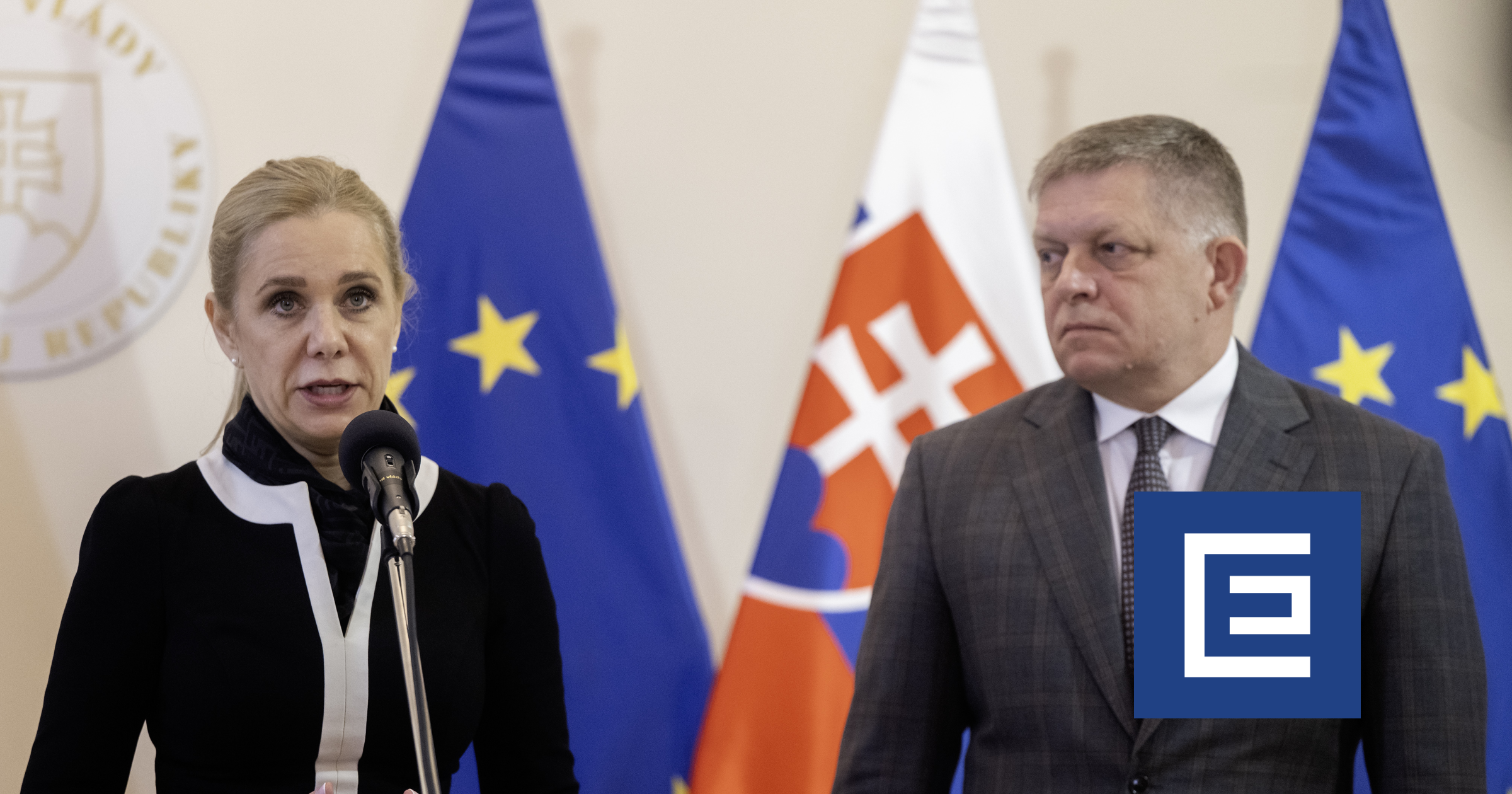
The Slovak government released a draft law containing 38 pro-growth economic measures Monday evening, giving the public less than 24 hours to review the proposals before a crucial tripartite meeting. The measures, prepared by Economy Minister Denisa Saková, are scheduled to be discussed Tuesday afternoon between government representatives, trade unions, and employers' associations. The government office published the draft legislation Monday night, allowing minimal time for stakeholders to study the nearly forty proposed economic reforms before the high-level negotiations. The tripartite council serves as Slovakia's main forum for dialogue between the government, labor unions, and business organizations on major economic and social policies.

|
Economy

Capital Market 2026 Conference to Address Digital Securities and Investment Uncertainty

Slovakia will host the Capital Market 2026 conference, focusing on emerging challenges facing financial markets including digital securities and investment strategies during uncertain times. The conference will address how geopolitical tensions, evolving risks, changing regulations, and advancing technologies are reshaping financial market operations. The event aims to examine how these factors are gradually transforming the functioning of capital markets and investment practices.

|
Economy

Slovakia's Government, Unions and Employers Set to Discuss Economic Support Package

Slovakia's government, trade unions and employers were scheduled to hold talks this afternoon on the first package of economic support measures. According to available information, the measures would have minimal impact on the state budget. The detailed legislative proposals were only published on the tripartite council's website Monday evening, forcing interested parties to wait for the specifics. The tripartite council is Slovakia's main forum for dialogue between government, labor unions and employer associations on economic and social policy. The delayed publication of the proposals' details reflects the ongoing negotiations between the three parties as Slovakia seeks to address current economic challenges while maintaining fiscal discipline.

|
Economy

Slovakia's Budget Deficit Worsens by €260 Million Under Fico Government

Slovakia's state budget performed €260 million worse by the end of May compared to the same period in 2024, according to official figures. The deteriorating fiscal position comes under the leadership of Prime Minister Robert Fico, whose government has been grappling with mounting budgetary pressures. Fico heads a coalition government of Smer-SD, his social-democratic party, along with the nationalist SNS and centrist Hlas parties, which took power following elections in 2023. The worsening budget performance highlights the fiscal challenges facing Slovakia as the government attempts to balance public spending commitments with economic pressures.

|
Economy

European Stock Markets Fall on Iran-US Diplomatic Breakdown

European stock markets declined on Monday as diplomatic efforts between the United States and Iran collapsed. Iranian state media announced that Tehran would halt negotiations with Washington and extend its blockade of the Strait of Hormuz in response to Israeli attacks on Lebanon. The breakdown in talks and continued disruption of the strategic shipping route, through which roughly 20% of global oil supplies pass, contributed to market uncertainty across European trading floors.

|
Economy

Slovak Companies Tackle Office Temperature Disputes as Energy Costs Rise

Major companies operating in Slovakia, including IKEA, banks, and gaming firm Pixel Federation, are implementing new policies to manage workplace temperature conflicts as disagreements between employees over air conditioning create tensions and drive up energy costs. The disputes, where some workers feel too hot while others are cold, are prompting firms to restrict employee control over climate systems amid rising energy expenses and environmental concerns. Some companies are adopting centralized temperature controls for entire buildings, while others are limiting employee access to thermostats or changing their office layouts to reduce conflicts. The measures reflect growing corporate focus on energy efficiency as businesses seek to balance employee comfort with cost management and climate goals.

|
Economy

Railway Expert Calls for Focus on Real Problems Amid Development Pressures

Railway expert Jiří Kubáček has emphasized the need to address genuine railway infrastructure problems rather than pursuing commercial developments. His comments come amid discussions about a proposed branch office project that would combine a shopping center with residential units. Kubáček expressed concerns about overcrowding in the area and questioned whether the focus should be on building a new headquarters facility. The expert's stance highlights ongoing debates about balancing commercial development with practical transportation infrastructure needs in Slovakia's railway system.

|
Economy

Founder of Collapsed Financial Group Threatens Bankruptcy Proceedings Against Slovak Meat Processing Plant

Pavol Krúpa, founder of the failed Arca financial group, is attempting to force the Danubius meat processing plant in Komárno into bankruptcy proceedings. The plant's owner, Tomáš Spuchliak, denies that his company faces serious debts and maintains that bankruptcy is not a threat. The dispute comes at a sensitive time as Spuchliak is currently in the process of selling the meat processing facility to new investors. Krúpa began his legal campaign against the company in early April, escalating pressure on Spuchliak's business operations.

|
Economy

Slovaks Made Over Two Million QR Payments in First Month of New System

Slovaks completed more than two million QR code payments during the first month of the new digital payment system's operation. The highest usage was recorded on May 29, which became the busiest day for QR transactions since the system's launch. The payment method allows customers to make purchases by scanning QR codes with their mobile phones, representing a significant adoption of contactless payment technology in Slovakia.

|
Economy

Ministry Extends Tender Deadline and Adjusts Conditions for Bridge Renewal Project

Slovakia's Ministry of Transport has extended the participation deadline and modified conditions for a major bridge renewal tender. The infrastructure project is planned to span 35 years, indicating a long-term commitment to upgrading the country's aging bridge network. The ministry's decision to adjust the tender parameters suggests either complications in the initial bidding process or efforts to attract more qualified contractors for the substantial infrastructure investment.

|